Parental Support: How to Build Communication with Children in the Current Conditions

Safety
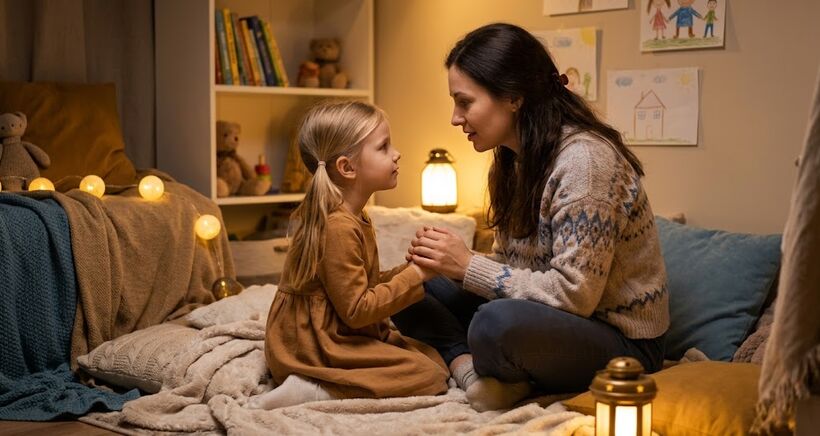
In critical, emergency situations, we reach a basic level in the pyramid of our needs: physiological needs and safety. For those remaining in Ukraine, we can currently speak of relative safety. For those who have left, we speak of safety in foreign conditions. For your children and yourself, you should strive to create the safest possible environment in an unstable external environment. While adults are guided by reality, for children, adults themselves are an additional guarantor of safety. Therefore, if your children have an additional, confident safety net from their parents—knowing that their parents are there, that they will do their best to protect them, and that they are doing everything possible—they will better cope with the situation and be able to cope.
Emotional state
Depending on the child’s individual characteristics, age, and the traumatic events, children may react to the situation in the country with various physiological, behavioral, and emotional reactions. It’s important to pay attention to changes in behavior (if the child was active but became quiet, or vice versa), regression (the child begins to act in ways typical of a younger child), and emotional incontinence. The most common symptoms are:
Children 0-3 years old. Fussiness, crying, refusal to eat, or excessive hunger, requiring constant attention from mother.
Children 3–6 years old. Anxiety, fears, sleep disturbances, enuresis, encopresis, refusal to play, cruelty in games
Children 6–9 years old. Aggression, disobedience, tearfulness, fears.
Children 9–12 years old. Powerlessness, cruelty, indifference, inattention, lack of concentration.
Children 12–14 years old. Pomposity, anger, aggression, indifference
Children over 14 years old. Mood swings, conflict, immaturity, incompetence, abruptness.
It is important to understand, see the symptoms, and be able to respond to them in a way that helps the child and parents.
And remember that all emotions are valid now. This is normal in an abnormal situation.
Organizing the life of a child and parents in uncertain conditions
Organizing the daily routine of both children and adults is also an important factor in maintaining peace and security. A daily agenda, daily rituals, and routines restore a sense of control to parents and children. Children can be given tasks that are within their capabilities, which will restore a sense of responsibility and engagement in the present.
The main guarantee of a child’s good health is the normalized health of the parents.
It’s important to understand what’s going on right now, what’s normal, how to express your emotions, how to talk about them, and, in general, how to talk about the war with children. You need to tell the truth, using age-appropriate language.
Concerns about the future of parents and children
Whatever the situation, we can always make plans. Perhaps for a day, perhaps for a week, perhaps for a long time. Those plans are within our power. This also restores a sense of responsibility for our lives and a certain certainty.